
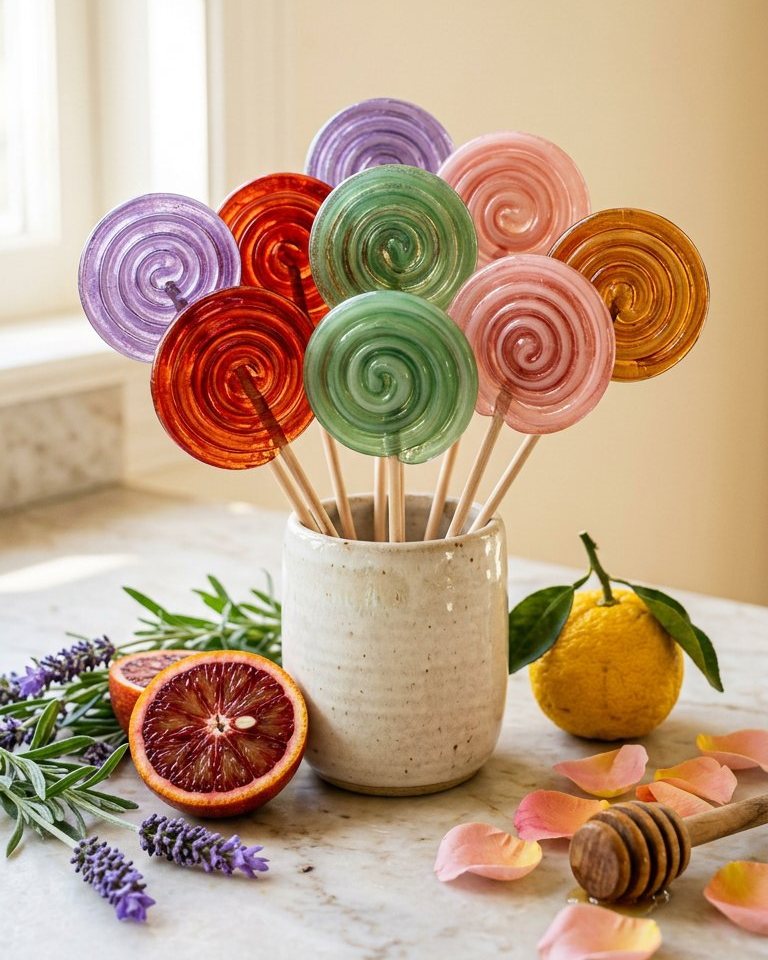
Walk past a candy stall at almost any farmers market and you'll notice that something has changed. The classic rainbow of cherry, grape and blue raspberry now shares space with lollipops flecked with lavender buds, hard candies that taste of blood orange and gentle chili, and translucent jade drops that carry the grassy depth of matcha. Artisanal candy makers are borrowing ideas from pastry kitchens, tea houses and spice markets, and the result is a new kind of sweet: one meant to be savored slowly rather than simply eaten.
In this guide, we take you inside the craft. You'll learn what "artisanal" really means in candy making, how flavor behaves in molten sugar, which combinations are worth seeking out, and how to taste, pair, store and share handmade candy so every piece is at its best.
What Makes a Candy "Artisanal"?
Mass-produced hard candy is designed for consistency at enormous scale: continuous cookers, depositing machines and flavor systems engineered to taste identical in every market. Artisanal candy starts from the opposite direction. It's made in quantities small enough for a confectioner to see, smell and adjust every stage of the batch.
- Small batches. A typical batch in our kitchen yields about 150 lollipops — little enough to watch the syrup's color, adjust a flavor on the fly and shape every piece by hand.
- Short, readable ingredient lists. Cane sugar, water and a little glucose syrup form the base. Flavor comes from botanicals, fruit powders, teas, spices, citrus oils and extracts.
- Hands-on techniques. Pulling, twisting, layering and stamping give each candy its texture and look, along with tiny variations that make it unmistakably handmade.
- Visible ingredients. Dried petals, flaky salt and specks of tea are suspended right in the candy, so you can see what you're about to taste.
The Science Behind Flavor in Hard Candy
A lollipop is, at heart, a piece of sugar glass. When sugar syrup is boiled to the hard-crack stage — roughly 300–310°F (149–154°C) — most of its water evaporates. As it cools, the sugar molecules don't have time to line up into crystals; they freeze in place as a clear, glassy solid. That structure gives a good hard candy its shine, its clean snap and its slow, even melt on the tongue.
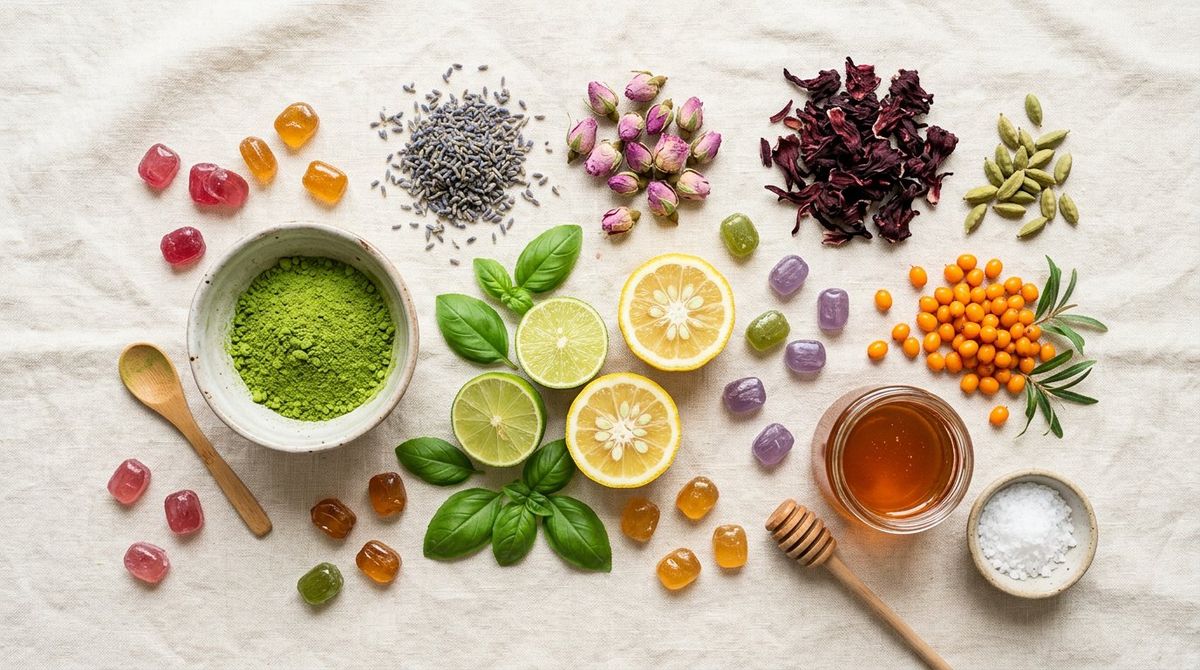
Heat is also the biggest challenge for flavor. Many of the aromatic compounds that make lavender floral or citrus zest bright are volatile, which means they evaporate easily. Add them too early and they disappear with the steam. That's why confectioners stir in most flavorings after the syrup leaves the heat and the boiling subsides, working quickly before the candy sets.
Balance matters just as much. Sugar is a powerful flavor muffler, so artisan makers use contrast to keep flavors vivid:
- Acidity from citric or malic acid adds brightness to fruit flavors. It goes in at the very end, because acid and prolonged heat break sugar down and can make candy sticky.
- Salt rounds off sweetness and makes caramel and toasted notes taste deeper.
- Gentle bitterness from green tea or citrus peel gives the palate something to hold on to.
- Warmth from chili, ginger or pink peppercorn builds slowly, so the flavor keeps evolving as the candy melts.
- Hard-crack stage
- 300–310°F (149–154°C)
- Water left in finished candy
- About 1–2%
- Flavoring window
- Right after the boil subsides
Signature Flavor Combinations Worth Tasting
The most memorable candy pairings follow the same logic as a great dish: a familiar anchor, a surprising accent and something that ties the two together. These four signature combinations show the range of what a lollipop can be. Select any card for full tasting notes, ingredients and allergen information.
 Floral
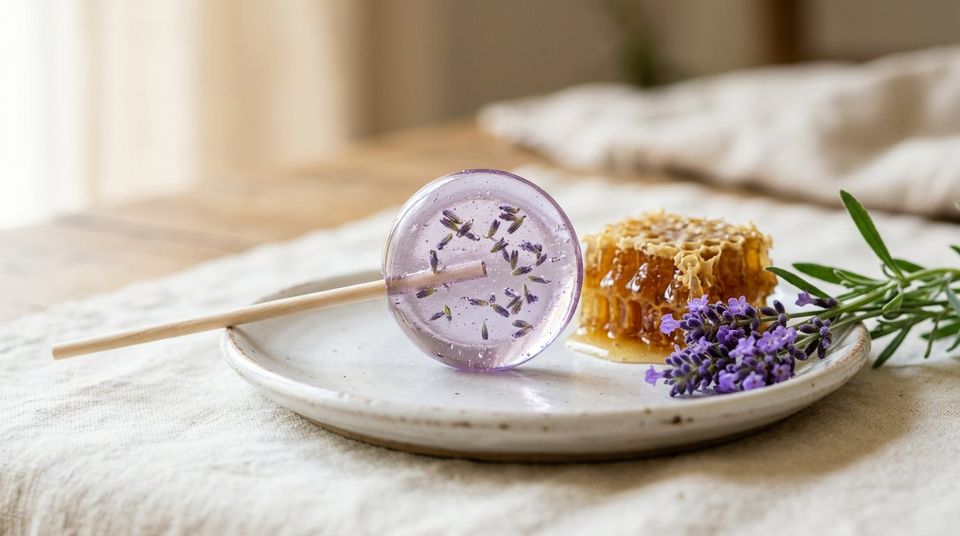
Lavender & Wildflower Honey
Soft, herbal lavender wrapped in round wildflower honey, finished with a whisper of lemon zest.
 Floral
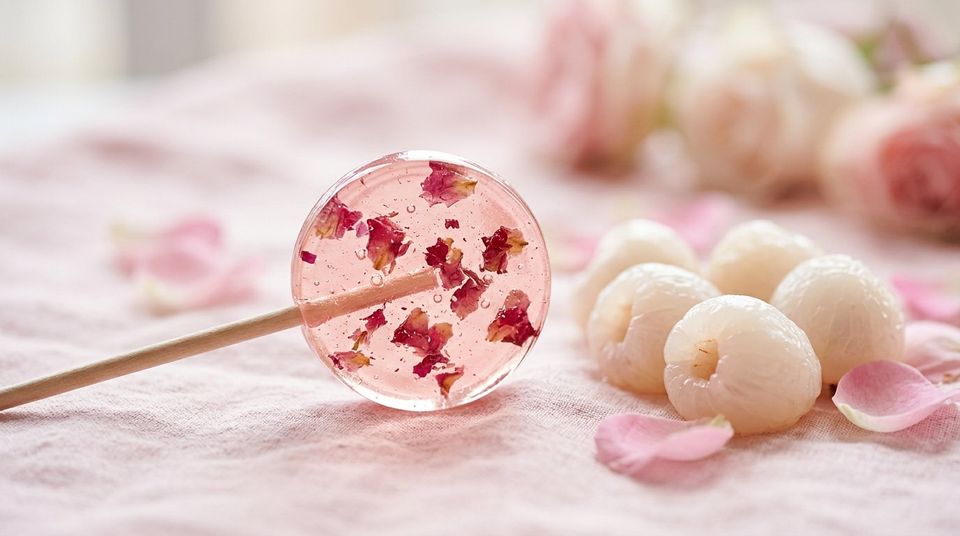
Rose & Lychee
Perfumed rose petals and juicy lychee — delicate and bright, with a clean floral finish.
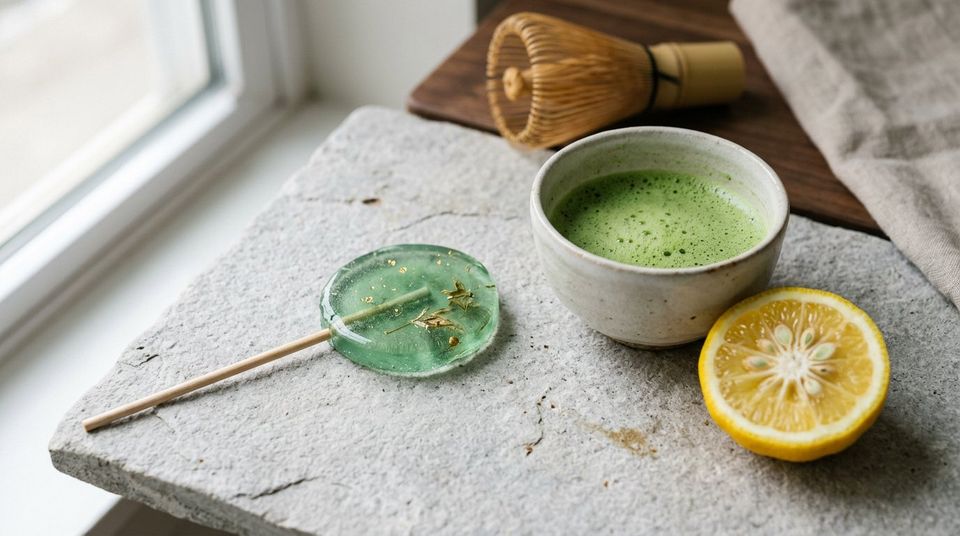 Herbal
Matcha & Yuzu
Grassy, gently bitter green tea lifted by the tart, floral zest of yuzu citrus.
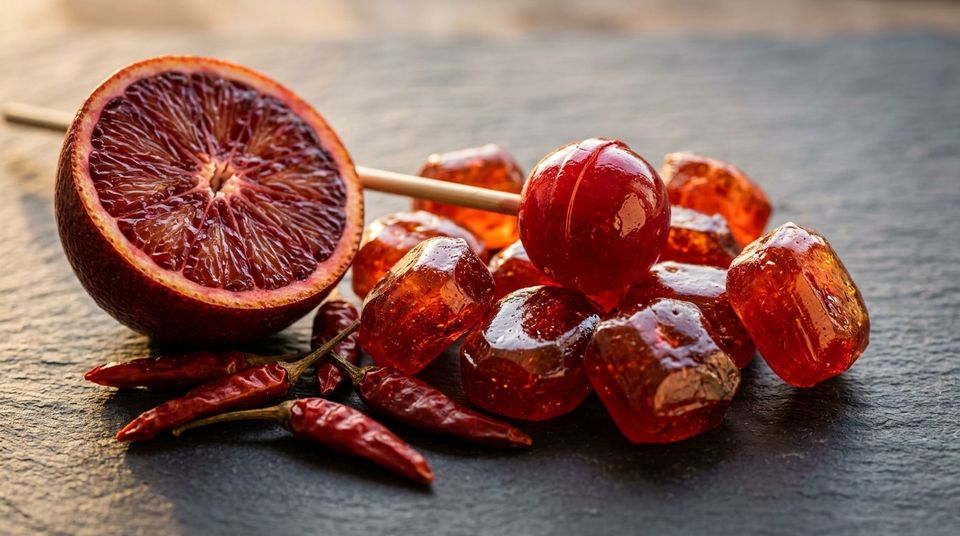 Bold & Savory
Blood Orange & Chili
Ripe citrus up front, followed by a slow, gentle ancho chili warmth on the finish.
The Seasonal Flavor Library
Beyond the signatures, our library rotates with the seasons — bright fruit in summer, warming spice when the weather turns cold. Search by ingredient or filter by flavor family to discover something new. Availability changes throughout the year.
Showing 12 of 12 flavors
-
Lavender & Wildflower Honey
Culinary lavender · wildflower honey · lemon zest
-
Rose & Lychee
Rose petals · juicy lychee · clean floral finish
-
Elderflower & Pear
Elderflower blossom · ripe pear · soft honeyed notes
-
Hibiscus & Wild Berry
Tangy hibiscus · blackberry · raspberry
-
Sea Buckthorn & Ginger
Tart sea buckthorn · zesty ginger · gentle warmth
-
Mango & Pink Peppercorn
Sun-ripe mango · sparkling pink peppercorn
-
Matcha & Yuzu
Matcha green tea · yuzu zest · light bitterness
-
Basil & Key Lime
Sweet basil · key lime · crisp and green
-
Rosemary & Grapefruit
Pink grapefruit · rosemary · bittersweet zest
-
Blood Orange & Chili
Blood orange · ancho chili · slow warmth
-
Smoked Sea Salt Caramel
Buttery caramel · smoked sea salt · vanilla
-
Black Sesame & Honey
Toasted black sesame · golden honey · sea salt
No flavors match your search yet. Try another ingredient or .
From Kettle to Stick: How a Batch Comes Together
Every batch follows the same five steps. The ingredients change with the flavor, but the rhythm of the kitchen stays the same — and timing is everything.
-
Dissolve the base
Cane sugar, filtered water and a little glucose syrup are stirred over gentle heat until the syrup turns completely clear. A wet pastry brush washes stray crystals from the sides of the pan, because a single undissolved crystal can turn an entire batch grainy.
-
Cook to hard crack
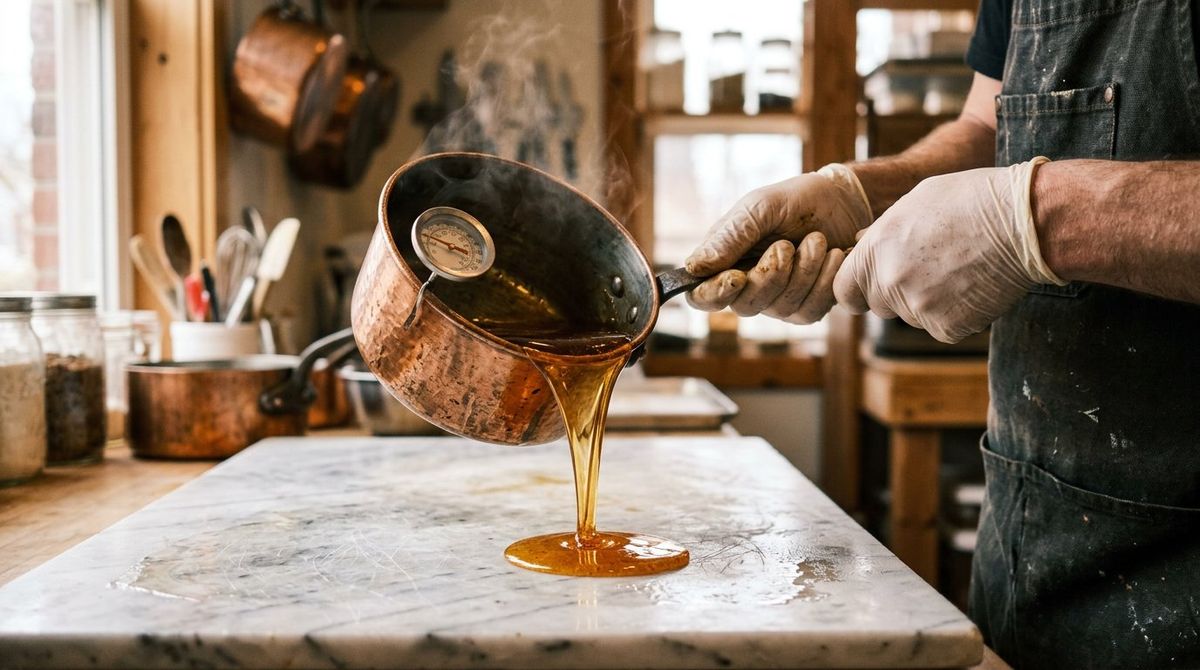
The syrup boils in a heavy copper kettle, which spreads heat evenly and responds quickly, while a calibrated thermometer tracks the climb to 300–310°F (149–154°C). Stop a few degrees early and the candy stays tacky; go too far and it tastes scorched.
-
Flavor, color and pour
Off the heat, we fold in the flavor: botanical extracts, fruit powders, finely ground tea or spice, and a pinch of acid for fruit blends. Colors come from fruit and vegetable concentrates. The molten candy is then poured onto a cool marble slab.
-
Pull, twist and shape
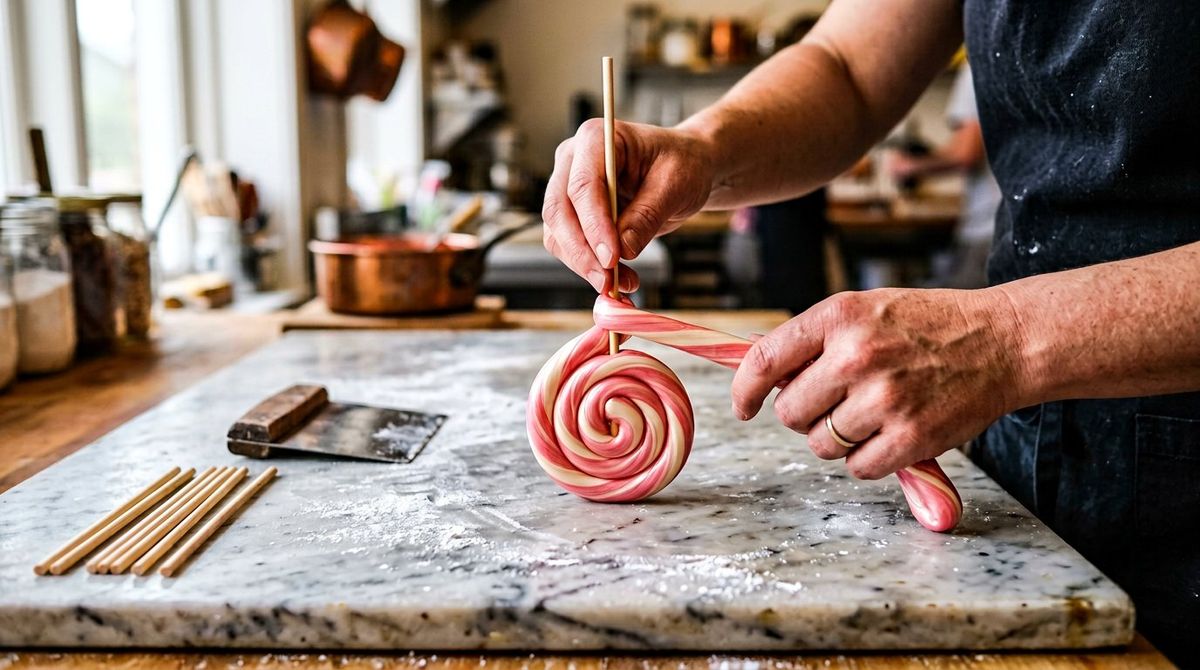
As the candy cools to a pliable, taffy-like stage, it's folded and pulled for a silky sheen, then cut into ribbons, twisted into spirals and pressed onto sticks. Confectioners wear heat-resistant gloves for this step — the sugar is still hot enough to burn.
-
Cool, inspect and wrap
Finished pieces cool at room temperature in a low-humidity room. Each one is inspected and individually wrapped, and every package carries a batch number, an ingredient list and allergen information.
How to Taste Candy Like a Pro
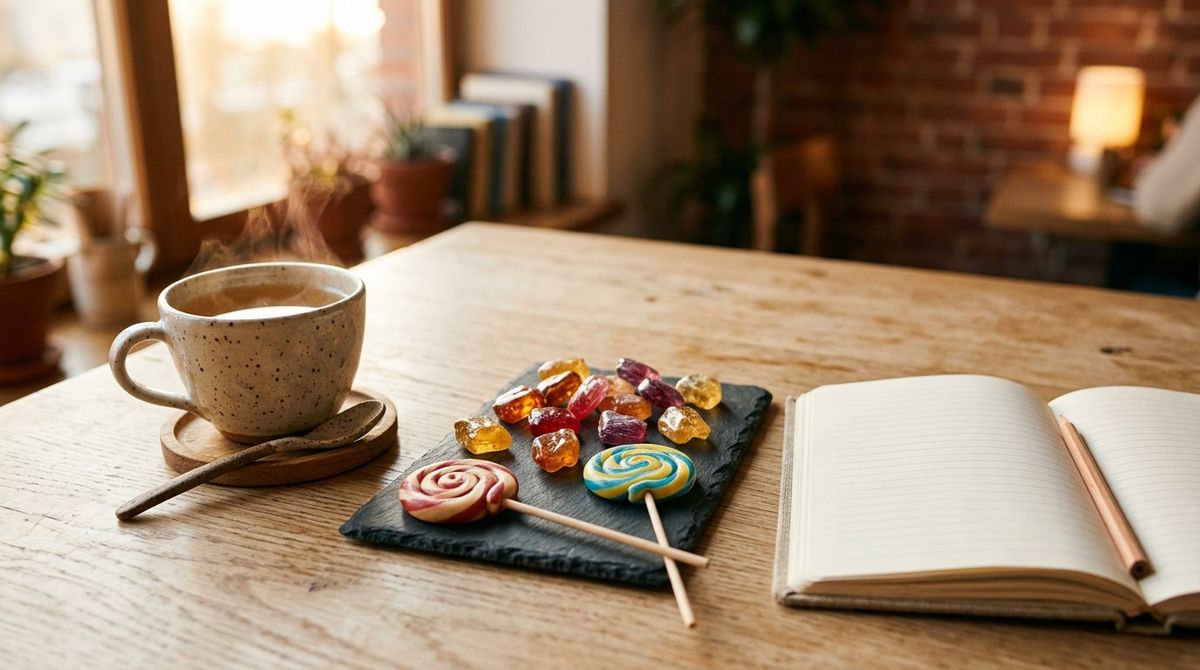
Handmade candy rewards a little attention. Professional tasters follow a simple routine that works just as well at your kitchen table:
- Look. Hold the candy up to the light. Clarity, color and any suspended petals or seeds hint at what's to come.
- Smell. Breathe in before the first taste. Much of what we perceive as flavor actually comes from aroma.
- Let it melt. Resist the urge to crunch. As the candy dissolves, bright top notes like citrus and flowers appear first, followed by deeper notes such as honey, tea or spice.
- Notice the finish. What lingers after the candy is gone? A gentle warmth, a hint of salt or a soft bitterness is the sign of a well-balanced flavor.
- Reset between flavors. A sip of water or a plain cracker clears your palate. Taste from delicate to bold so stronger flavors don't overwhelm subtle ones.
Pairing Ideas for Tea, Coffee and Cheese Boards
Artisanal candy is a natural partner for drinks and snacks with their own complexity. Use these pairings as a starting point, then trust your own palate.
| Flavor | Try it with | Why it works |
|---|---|---|
| Lavender & Wildflower Honey | Earl Grey tea, fresh goat cheese | Bergamot echoes the floral notes, while tangy cheese balances the honey. |
| Rose & Lychee | Jasmine tea, sparkling water | Floral notes harmonize, and bubbles lift the aroma. |
| Matcha & Yuzu | Sencha, butter cookies | Green tea doubles down on grassy notes; butter softens the bitterness. |
| Blood Orange & Chili | Dark roast coffee, 70% dark chocolate | Roasted bitterness frames the citrus and makes the warmth glow. |
| Smoked Sea Salt Caramel | Espresso, crisp apple slices | Salt and smoke deepen the coffee, and apple adds fresh contrast. |
| Sea Buckthorn & Ginger | Rooibos tea, aged cheddar | Tart berry and ginger cut through rich, nutty cheese. |
Storing and Gifting Handmade Candy
Because hard candy is a sugar glass, it's hygroscopic: it pulls moisture from the air. Humidity is what turns a glossy lollipop sticky or cloudy, so good storage is mostly about keeping water out.
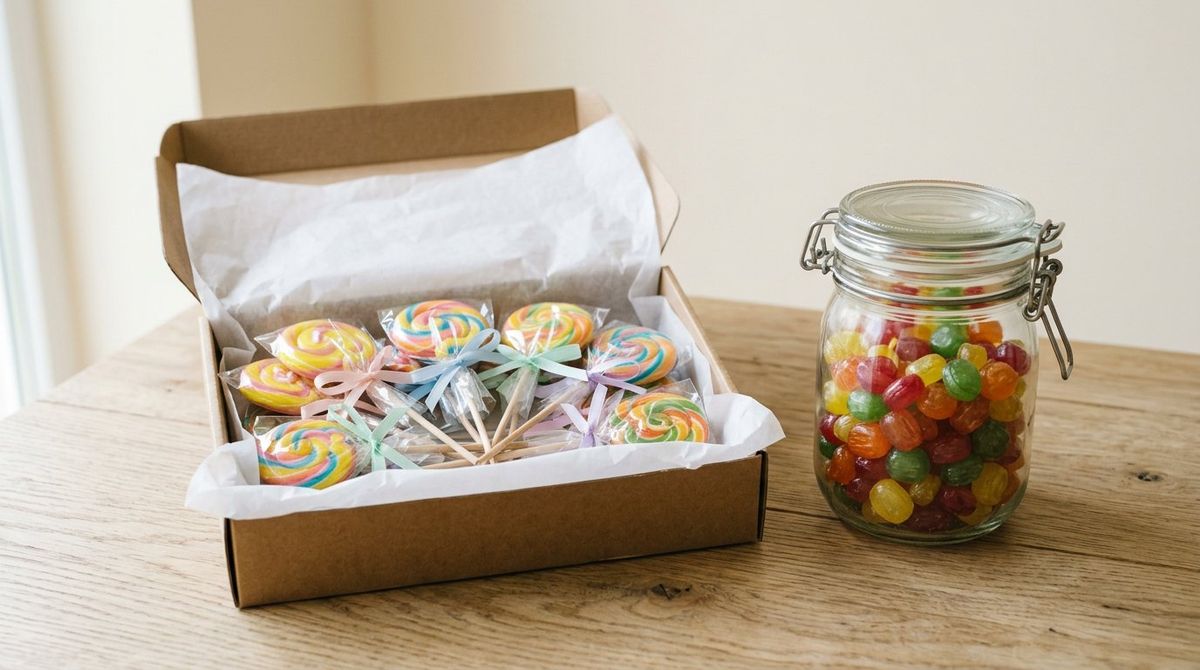
- Keep it airtight. Store wrapped candy in a sealed jar or container, away from sunlight and heat sources.
- Skip the refrigerator. Cold candy collects condensation when it returns to room temperature. A cool, dry cupboard around 60–70°F (16–21°C) is ideal.
- Add a desiccant in humid climates. A food-safe silica gel packet inside the container absorbs stray moisture.
- Enjoy within six months. Well-wrapped hard candy keeps much longer, but aromatic flavors like citrus and flowers taste brightest in the first few months.
Handmade candy also makes a thoughtful gift. Individually wrapped lollipops work beautifully as wedding and party favors, a tea-pairing box makes a memorable host gift, and a small jar of mixed flavors travels easily. When gifting, include a card listing flavors and allergens, and keep packages out of hot cars and direct sun.
Safety and Allergen Notes
Like any sweet, artisanal candy is best enjoyed in moderation as part of a balanced diet. For general guidance on food allergies, visit the U.S. Food and Drug Administration's food allergy resources.